As artificial intelligence changes advertising and content creation, brands are beginning to look for real people willing to license their image and likeness for AI-generated campaigns, virtual presenters and global marketing content.
Digital likeness licensing allows brands to use approved images, appearances or profile content to create agreed AI-assisted marketing and digital campaign materials.
Rather than attending multiple shoots, talent may be able to grant permission for approved digital content to be created under clear licensing terms.
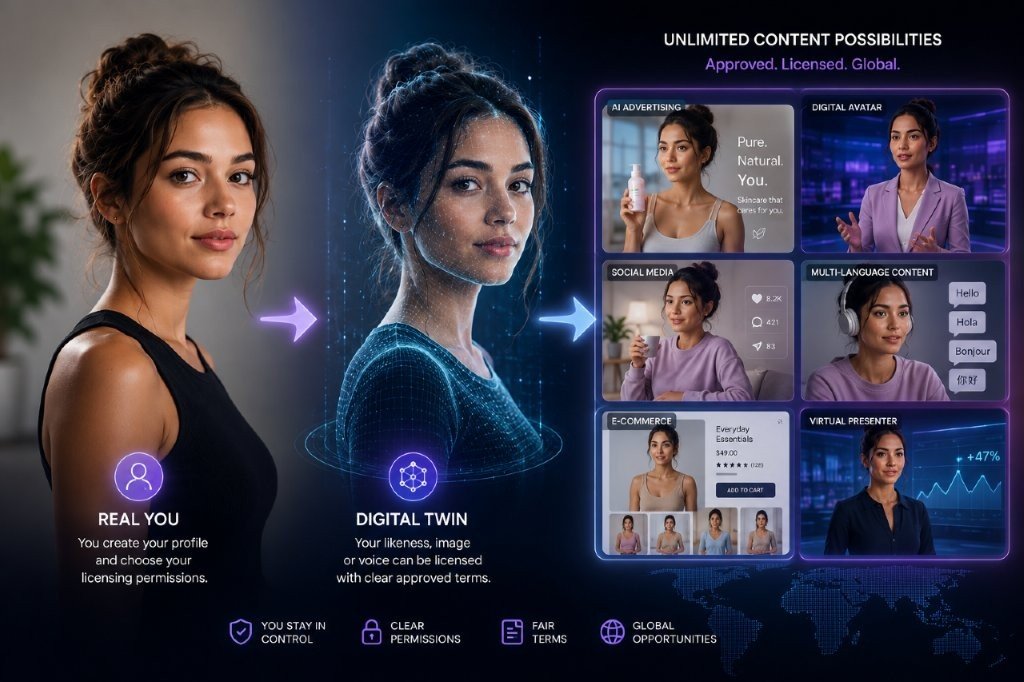
Digital licensing can support AI-generated advertising, product campaigns, virtual presenters, multi-language content, avatar-style campaigns and digital marketing assets.
Digital licensing should always be handled carefully, with clear permissions, agreed usage and project-by-project terms.
Show your look, content style, experience and interest in digital licensing opportunities.
Decide whether you are open to image licensing, AI advertising or virtual presenter opportunities.
Brands and agencies can post licensing opportunities with usage details and campaign requirements.
Every project should have clear usage rights, duration, territory, fees and approval terms.
These are the current AI and digital licensing options available for casting briefs on All Stage Casting.
Permission to use a person’s appearance, likeness or approved imagery within AI-assisted content and marketing campaigns.
Licensing existing photographs for websites, advertising, social media, product campaigns and marketing materials.
AI-generated advertising content featuring approved talent imagery, likeness rights or campaign-specific usage.
Digital presenter, spokesperson or avatar-style content used for websites, explainers, training or marketing.
These categories help clients explain how they want to use approved talent imagery, likeness or digital content.
A broad option for brands that want permission to use a person’s appearance or approved imagery in AI-assisted digital content.
A straightforward option for campaigns that use existing approved photographs in digital marketing, advertising or social media.
A campaign-focused option where approved talent imagery or likeness is used in AI-assisted ad creative.
A presenter-style digital use case where a person’s approved likeness may appear as a spokesperson, host or avatar-style figure.
This category can work alongside modelling, acting, UGC and family opportunities for talent who are open to permission-based digital use.
License your image or likeness for approved advertising, product and digital campaigns.
Explore virtual presenter, commercial campaign and AI-assisted screen content opportunities.
Scale creator-style content across platforms, formats, products and digital campaigns.
Future family-focused digital campaigns, lifestyle content and responsible brand licensing.
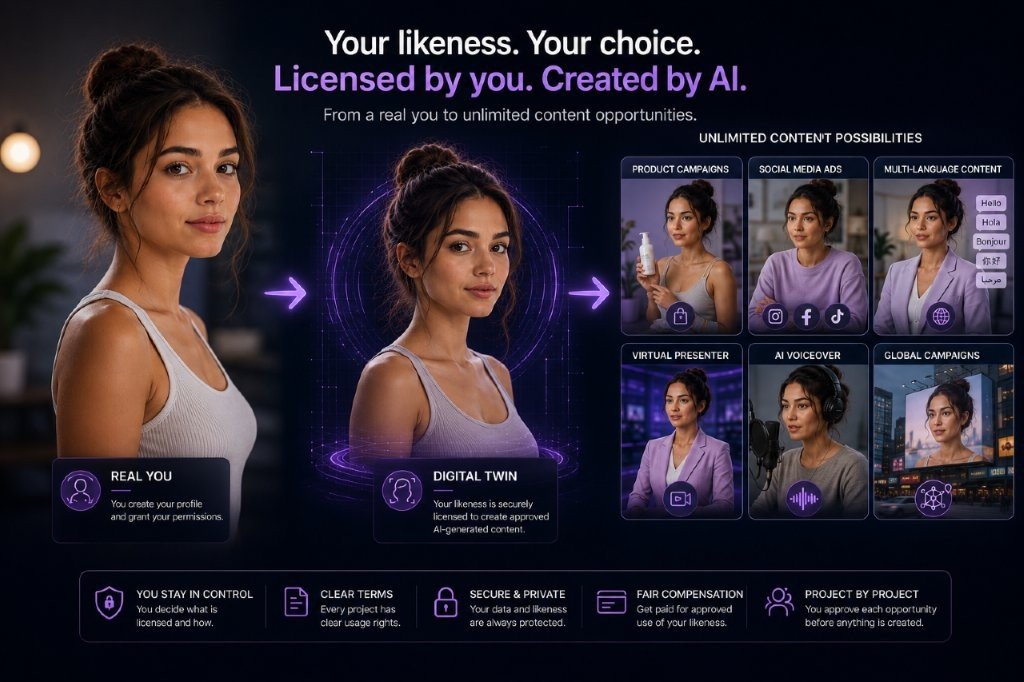
Talent should always understand the usage, duration, territory, media, exclusivity, approval rights and payment terms before agreeing to any digital likeness or AI licensing.
Not every model, actor or creator will want to license their likeness for AI-generated content. Digital licensing should be optional, transparent and controlled by clear permissions.
Brands increasingly need content across different platforms, regions, languages and formats. Digital licensing can support scalable content production when handled with clear consent and responsible usage terms.
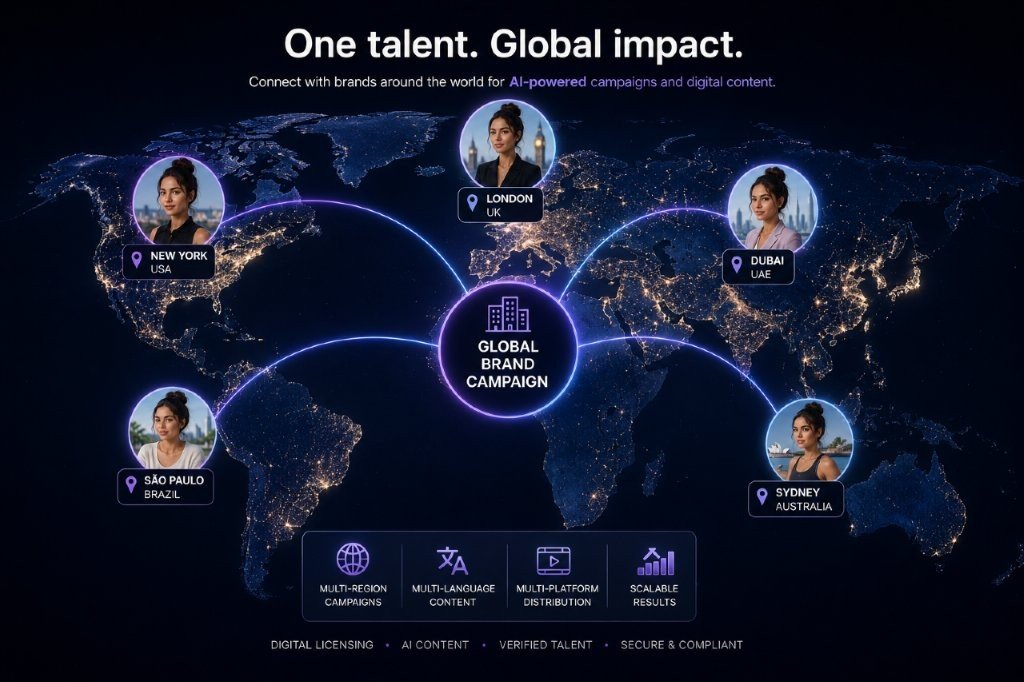
Create approved content variations for different markets, languages or platforms.
Produce digital assets for paid ads, Reels, TikTok and social campaigns.
Support product demos, explainers, e-commerce campaigns and brand launches.
Work with talent who are open to specific digital licensing opportunities.
Quick answers about likeness rights, permissions, fees and how digital licensing opportunities may work.
No. Digital likeness and AI licensing should always be optional. Talent can decide whether they are open to these opportunities.
No. A project should clearly define what is being licensed, how it can be used, where it can be used and for how long.
Yes. Talent should be able to specify whether they are open to image use, virtual presenter use, AI advertising or other digital licensing options.
Fees should be agreed per project and may depend on usage, duration, territory, media type, exclusivity and the level of digital rights required.
Only where legally permitted and with appropriate parent or guardian consent. Any child-related digital licensing must be handled with extra care, safeguarding and clear legal permissions.
Create your profile and let brands know whether you are open to image licensing, AI advertising, virtual presenter work or future digital content opportunities.
Opportunities are not guaranteed. Digital likeness licensing should always be reviewed carefully with clear terms, permissions and usage rights.