All Stage Casting is exploring a future content licensing feature where models, children, parents, families and creators may be able to licence approved photos, self-created images and AI-generated likeness content to brands.
Before developing this feature, we want to hear from the people who may use it. Your feedback will help determine whether content licensing becomes part of All Stage Casting.
Brands often need real, natural and relatable content for websites, social media, campaigns, parenting products, family brands, education, healthcare, fashion and lifestyle marketing.
Instead of organising a full photoshoot every time, a brand may be able to request a licence to use approved images or digital content from suitable talent.
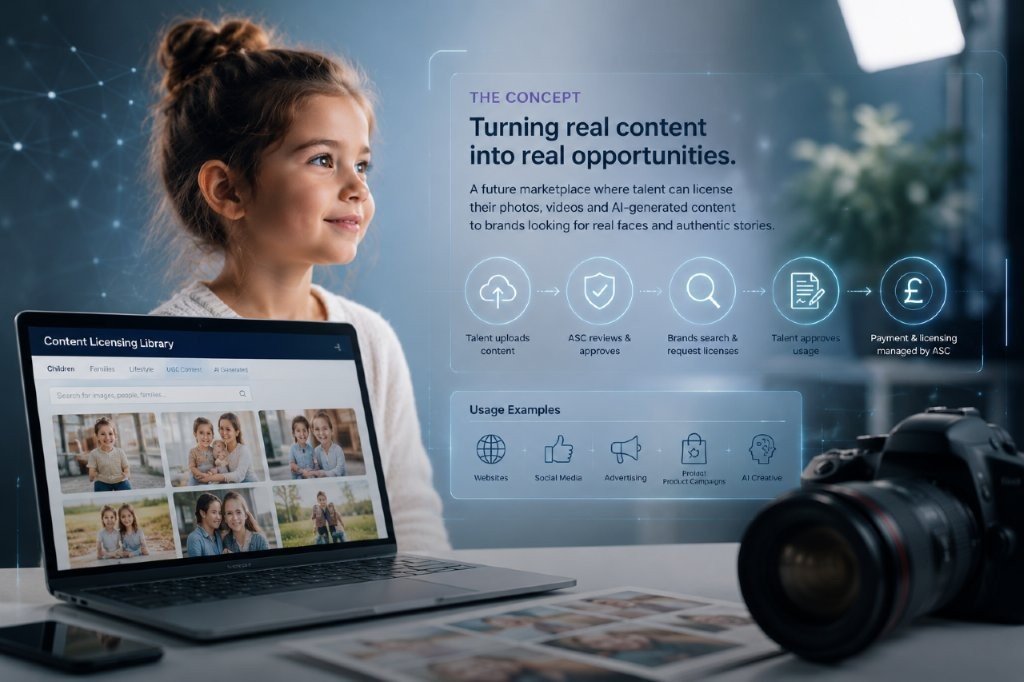
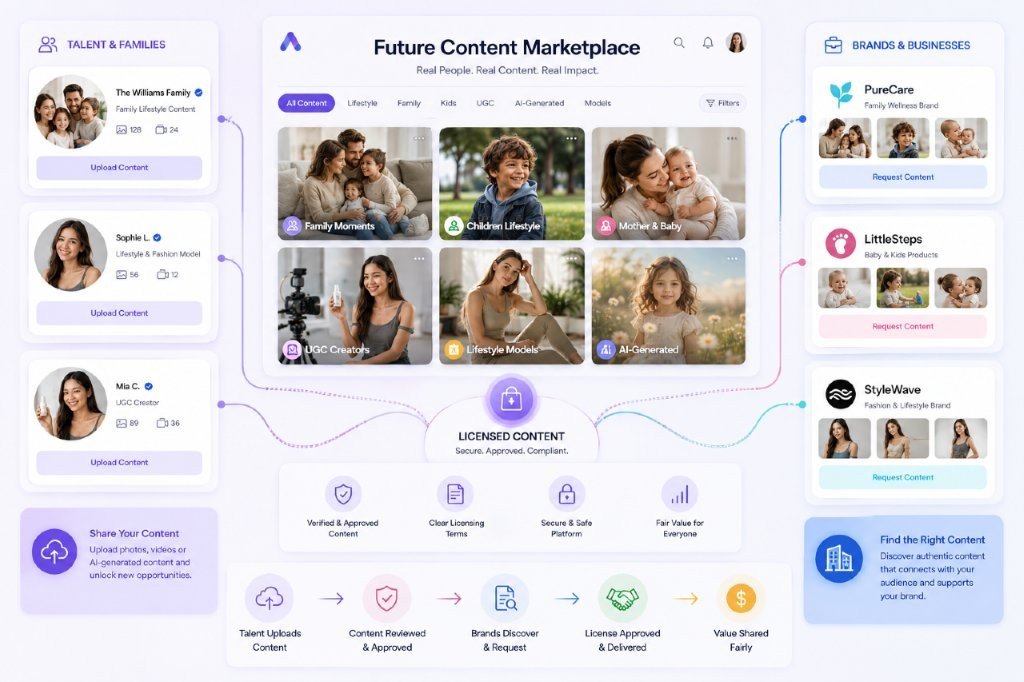
A future library could allow talent to upload approved content while brands request usage rights through ASC.
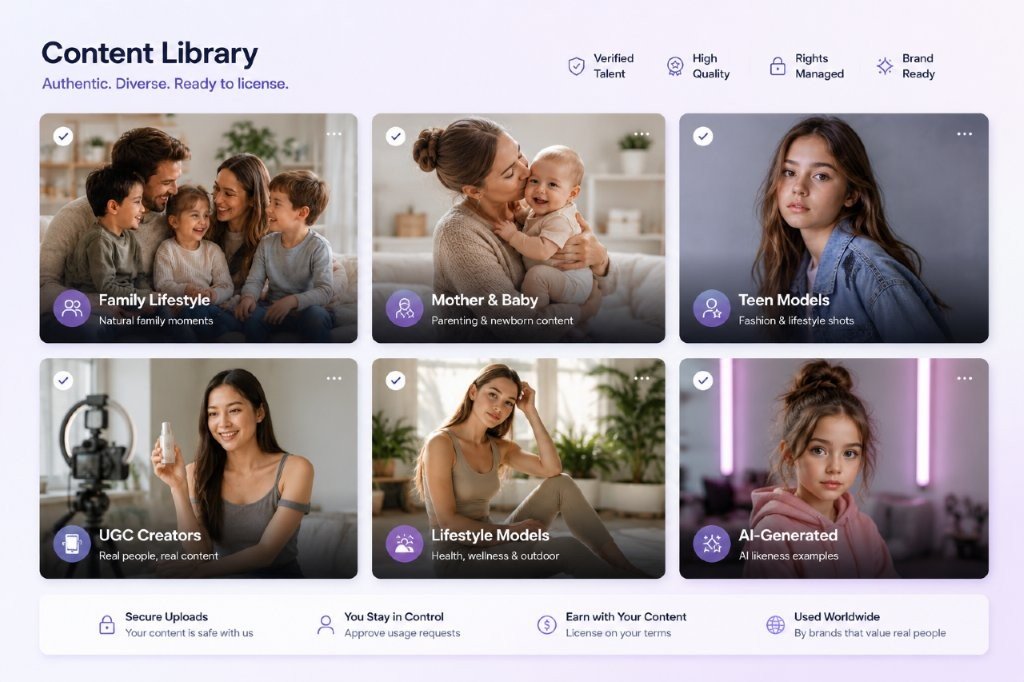
Content could include lifestyle photos, family images, UGC-style content, model images and clearly labelled AI-generated likeness examples.
We are researching whether approved talent content could be made available for brands to request licensing permission.
The strongest opportunities are likely to be authentic images of real people, children, parents, families and creators that brands can use responsibly in digital campaigns.
Natural images of children suitable for family, education, clothing, toys, parenting and lifestyle campaigns.
Real family moments, parent-child imagery, sibling content and authentic home or outdoor lifestyle visuals.
Approved commercial, fashion, lifestyle or e-commerce style images from models open to licensing opportunities.
Creator-style photos and videos that may be suitable for social media, ads, product launches and brand campaigns.
Images where talent could be suitable for fashion, baby products, family products, toys, technology or lifestyle brands.
Authentic images of real people, parents, children and families that feel natural rather than overly staged.
AI-created images based on a talent’s own likeness, clearly labelled and only considered where rights are confirmed.
Approved examples of how a real person’s likeness could be used in future AI-assisted brand content.
Usage would depend on clear permission, agreed licence terms and the type of campaign.
A website image, social post, paid advert, AI-assisted creative or product campaign could all require different permissions and licence terms.
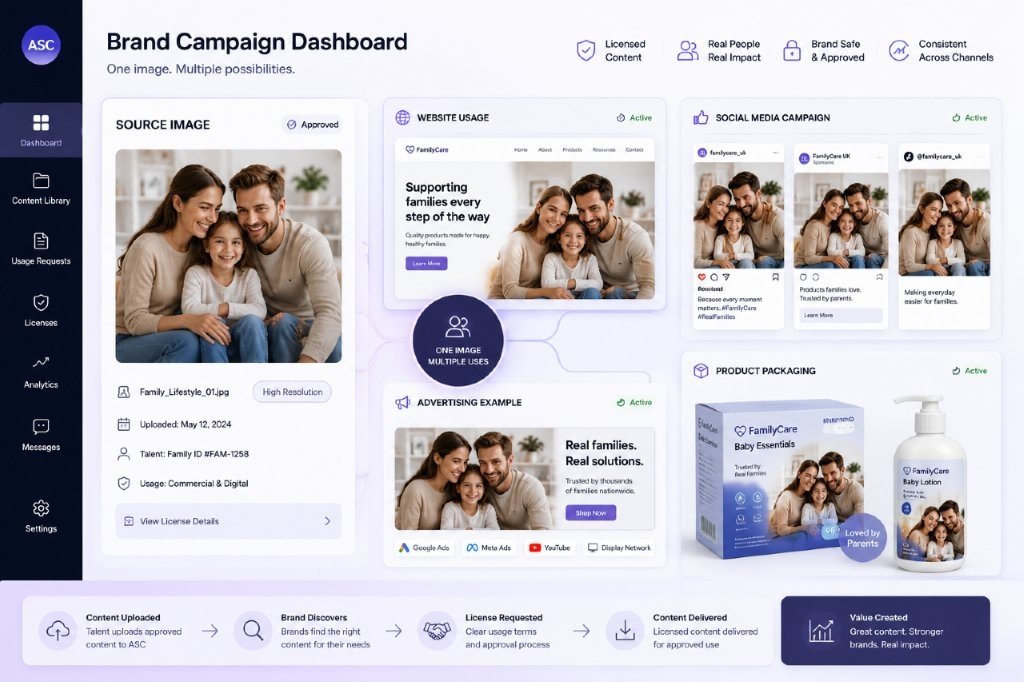
Brands could request images for websites, social media, paid advertising, product marketing and approved AI-assisted creative.
Family, parenting, education, healthcare or lifestyle brands may need authentic images for website sections.
Brands may request content for Instagram, TikTok, Facebook, Pinterest or organic social media posts.
Approved images could be requested for paid social ads, display campaigns or digital advertising creatives.
Brands may want real people, children or families associated with products, services or lifestyle use cases.
A child or family image could help inspire approved AI-assisted campaign variations, with clear permission.
Images could be used for approved campaign concepts, brand decks, product previews or marketing mockups.
Some brands may need natural images for articles, guides, newsletters or educational campaign content.
Future requests may include digital likeness, virtual presenter or AI licensing where legally appropriate.
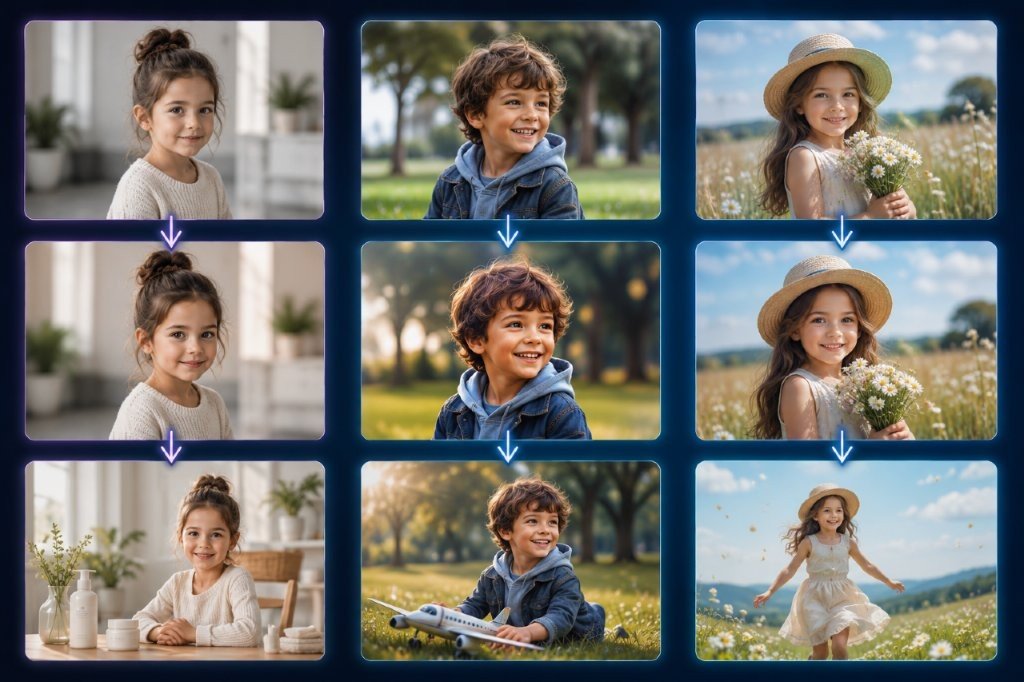
AI-assisted use would need to be clearly requested, separately approved and reviewed carefully before any content is released.
A parent may upload an approved image of their child. A brand may request permission to use that image as part of a carefully controlled AI-assisted campaign.
For example, an education brand may want an image to inspire approved digital campaign variations. This would require clear consent, defined usage, time limits, territory, payment terms and safeguarding review.
This is only a proposed workflow. The final feature would depend on survey results, legal checks and platform development.
Photos, UGC-style content or AI-generated images may be uploaded for review.
Talent confirms ownership, permission and whether AI-generated content is involved.
Images may need approval before they are shown as available for licence requests.
Clients request a licence based on usage, duration, territory and campaign type.
Talent or parent approval would be required before any content is supplied.
This concept would only work if content is handled carefully, transparently and with clear permission from the people involved.
Content would not be automatically downloadable. The preferred model is request-based, with parent or talent approval before any final file is released.
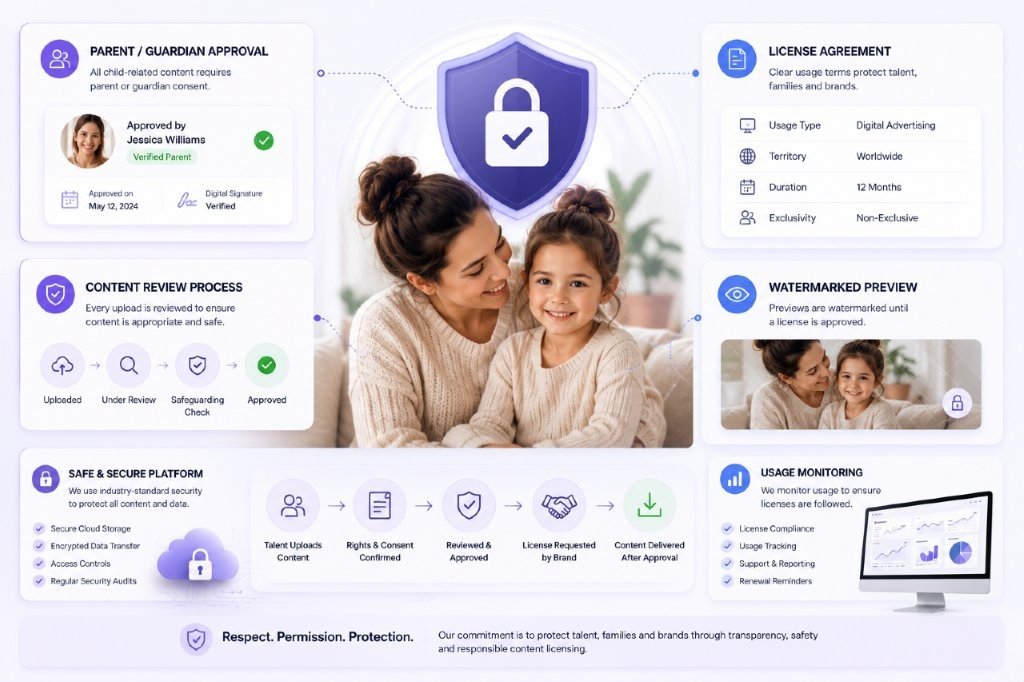
Watermarked previews, approval requests and clear licence terms would help protect talent content.
Talent would need to confirm they own the content or have permission from the photographer or rights holder.
Any child-related content would require parent or guardian approval before being considered for licensing.
Licence requests would need to define usage type, duration, territory, exclusivity and campaign purpose.
The concept would be based on licence requests, not allowing brands to instantly take or download images.
AI-generated images would need to be clearly labelled so brands understand what is real and what is AI-created.
Any future payments would depend on client demand, usage type, budget and agreed licence terms.
If this feature is developed, content licensing fees would likely vary depending on how content is used, where it appears, how long it is licensed for and whether exclusivity is required.
A small website licence would not carry the same value as a national advertising campaign, AI-assisted project or long-term commercial usage agreement.
Because the concept is still being researched, there is currently no fixed pricing structure and no guaranteed earnings.
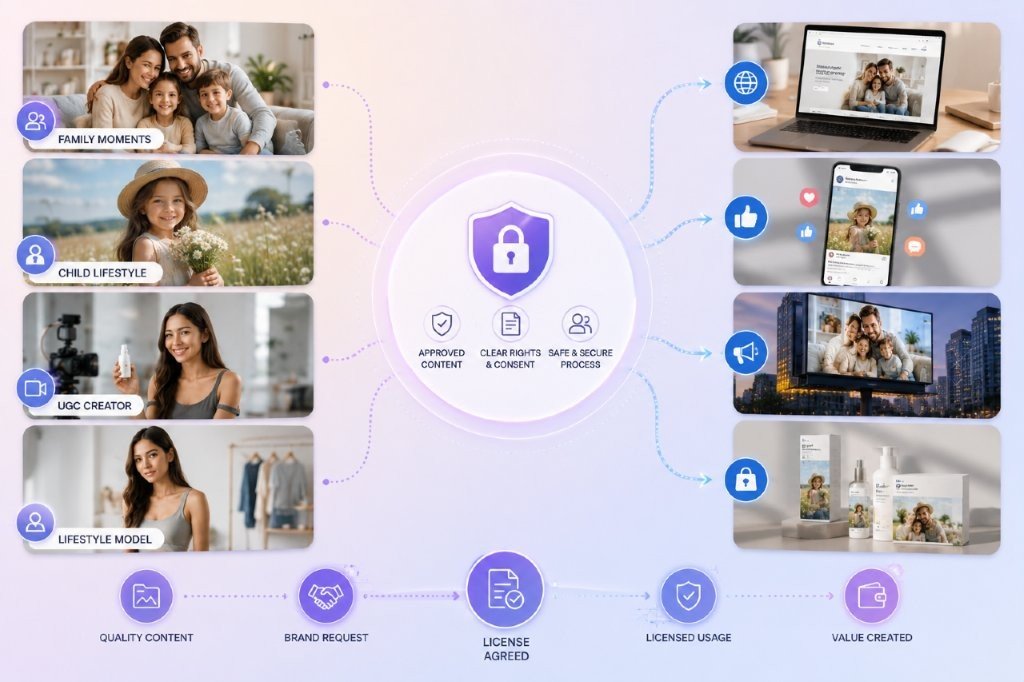
Licensing value may depend on content type, intended usage, duration, territory and campaign requirements.
Smaller licences may be suitable for websites, blogs, newsletters and organic social media content.
Commercial advertising campaigns typically require broader usage rights and may carry higher licensing value.
Future AI-assisted usage and digital likeness projects may require separate permissions and licensing terms.
We are asking talent, parents, creators and brands to share feedback before we decide whether to build this feature.
Share your feedback and help us understand whether this feature should be developed.
Answers about the concept, image rights, children, AI content, earnings and usage.
No. This is currently a research concept. We are collecting survey feedback before deciding whether to build the feature.
Content licensing means giving a brand permission to use approved content, such as a photo or digital image, under agreed terms.
No. The concept is not to create a standard stock image marketplace. It would be based on talent profiles, approval, licensing requests and clear usage terms.
Potential examples include family lifestyle photos, child modelling images, parent and child photos, UGC-style images, product-friendly content and approved AI-generated likeness images.
Only with appropriate parent or guardian consent and clear usage terms. Any child-related content would need extra safeguarding, review and approval.
Possibly. AI-generated images would need to be clearly labelled, based on the talent’s own likeness, and only considered where the person has the right to license them.
No. The concept would be based on request and approval. Brands would need agreed licence terms before using any content.
If developed, the platform would likely use watermarked previews, limited resolution images and only release final files after permission and licence terms are agreed.
No. The preferred concept is a request-based system, where a client requests permission and content is only supplied after approval.
Talent would need to confirm they own the content or have permission from the copyright owner, such as a photographer, before it could be considered for licensing.
The photographer may own the copyright unless rights were transferred or permission was granted. This would need to be confirmed before licensing.
If the feature launches and a licence is agreed, talent may be paid depending on the licence terms. No earnings are currently guaranteed.
There is no fixed rate. Fees would depend on usage, duration, territory, exclusivity, client budget and whether the image is used for social, website, advertising or wider commercial purposes.
Not at this stage. Pricing has not been finalised because the feature is still being researched.
Potentially, yes. Everyday family content may be valuable to brands if it is natural, clear, high quality and suitable for commercial use.
Yes, this concept may be especially relevant to UGC creators who already create natural product, lifestyle and social media content.
Yes. If developed, content would likely need ASC review before being made visible for licensing requests.
Only if editing rights were included in the agreed licence. Editing, AI alteration or campaign adaptation would need to be clearly stated.
Only if the licence allowed AI-assisted usage. AI usage should be treated separately from standard image licensing.
Yes. The concept is based on permission, so talent or parents should be able to decline unsuitable requests.
We want to understand whether talent and brands would genuinely use this feature before investing in development.
Models, actors, UGC creators, parents of child talent, families, photographers, agencies, brands and marketing teams can all share feedback.
No. The survey is for research only and does not commit you to uploading images or licensing content.
Share your thoughts and help us decide whether this feature should become part of All Stage Casting.